
A beautifully designed room isn't necessarily about expensive furniture. It's about proportion. One of the most common design mistakes I see is furniture that's either too large or too small for the space. A gorgeous sofa can overwhelm a living room, an undersized rug can make everything feel disconnected, and even a beautiful coffee table can look awkward when the dimensions are wrong.
Whether you're furnishing a new home, refreshing a room, or preparing a property for sale, getting the scale right makes all the difference.
1. Living room furniture: Start with the layout
For most living rooms, these are useful starting measurements:
Standard sofa 72–96 inches wide
Large sofa 96–120 inches wide
Coffee table About ⅔ of sofa length
Coffee table height Within 1–2 inches of sofa seat height
Sofa to coffee table 14–18 inches
Main walkways 30–36 inches minimum
Accent chairs 24–36 inches wide
2. Coffee tables: The two-thirds rule
Your coffee table should generally be about two-thirds the length of your sofa. This creates visual balance without making the table feel oversized. For example, a 90-inch sofa pairs well with a coffee table around 54–60 inches long. Leave approximately 14–18 inches between the table and sofa so it's comfortable to reach drinks, books, and other essentials.
3. Console tables and media cabinets
A console should feel substantial enough to anchor the wall or television above it. For a 65-inch television, consider a media console approximately 70–84 inches wide. Ideally, the console extends beyond the television on both sides. For entryway consoles, aim for a depth of 12–18 inches in tighter spaces and allow at least 36 inches of comfortable circulation where possible.
4. Living room rugs: Bigger is usually better
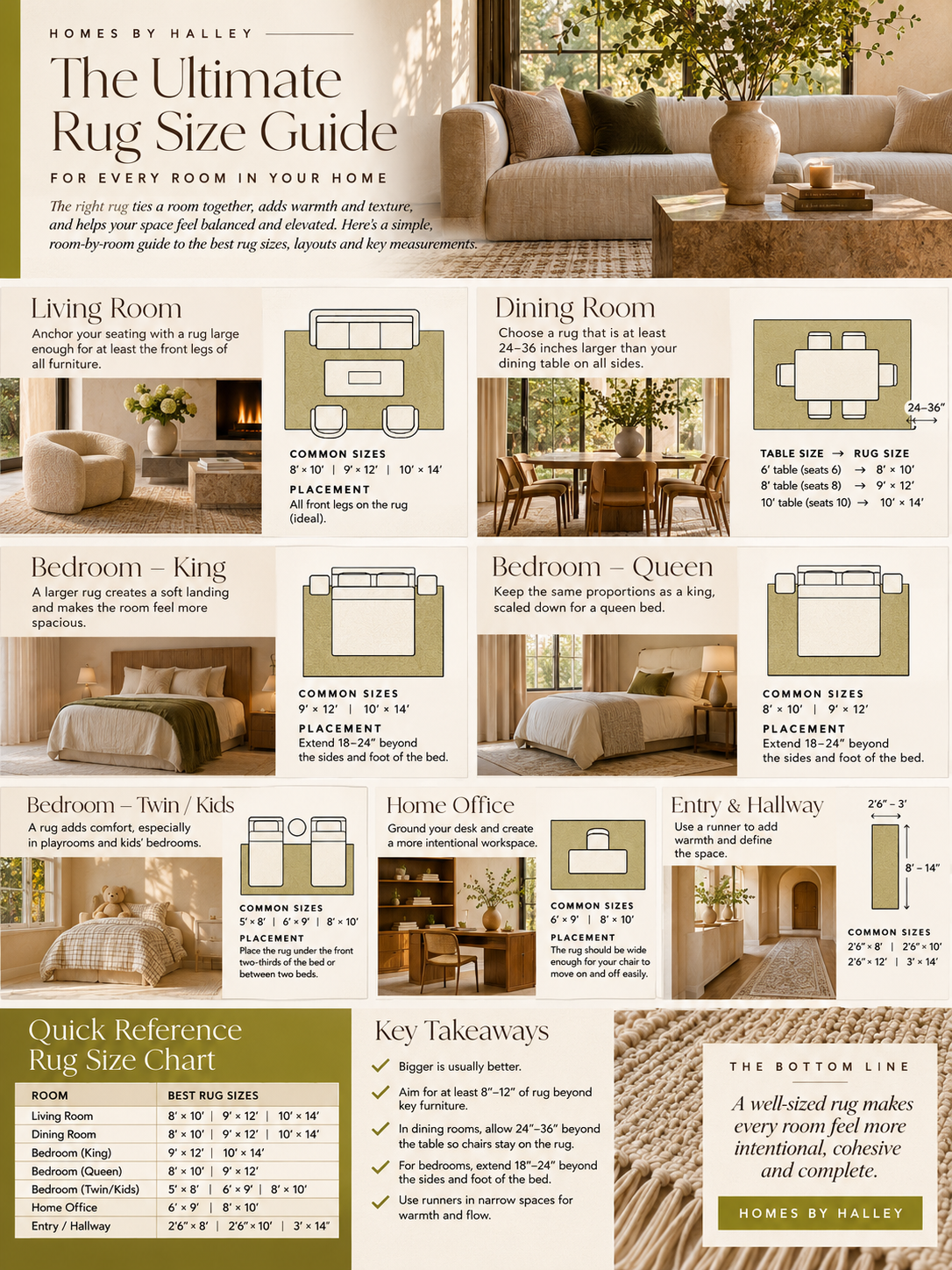
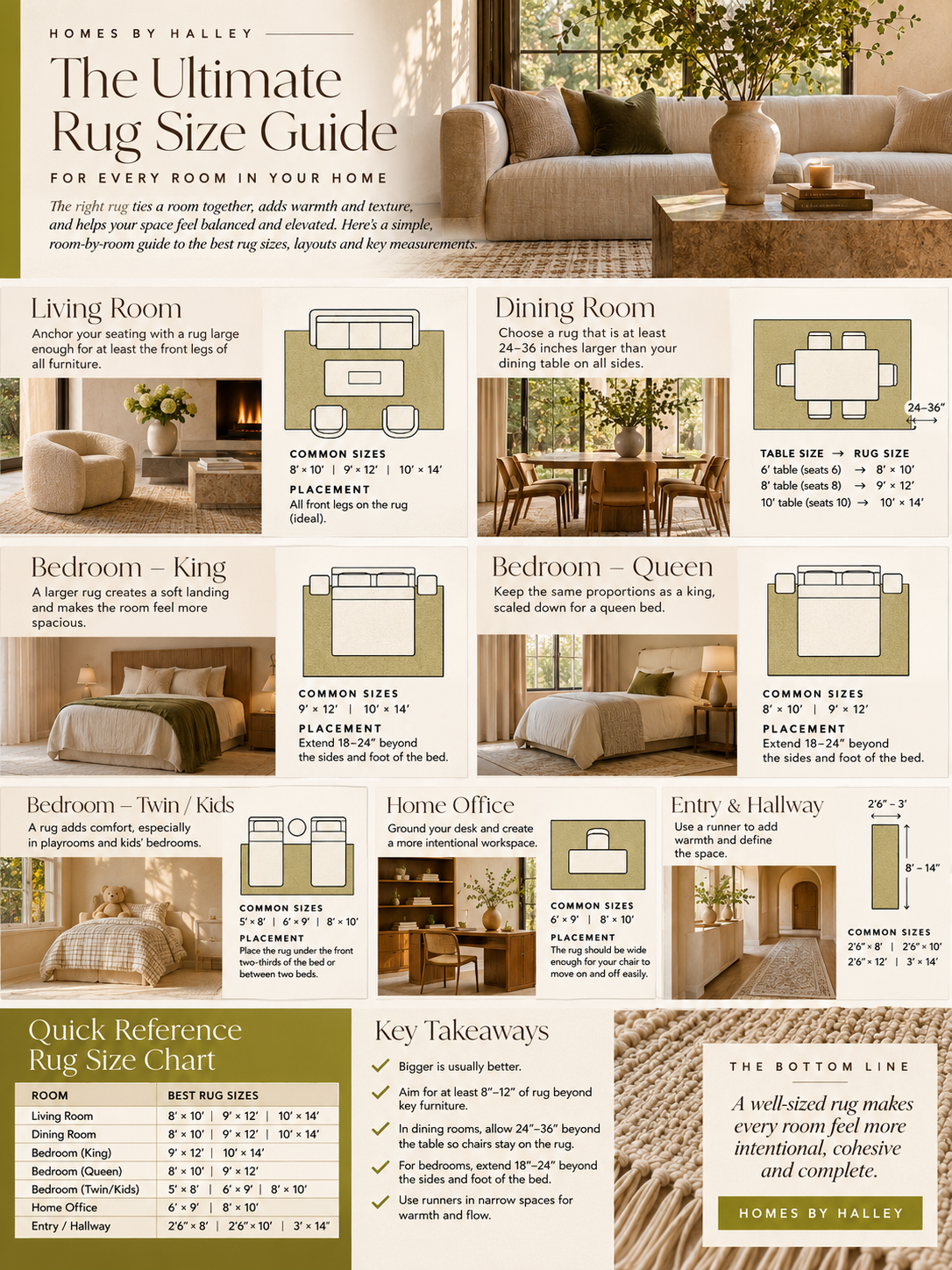
One of the quickest ways to make a room feel smaller is choosing a rug that's too small. An 8×10-foot rug works for many medium-sized living rooms. A 9×12 is often better for larger seating arrangements, while spacious living rooms may benefit from a 10×14. The goal is to have at least the front legs of your sofa and accent chairs resting on the rug. In larger rooms, placing all furniture legs on the rug can create an especially cohesive look.
5. Dining room rugs: Don't forget the chairs
Dining rugs should extend approximately 24–36 inches beyond the table on every side, allowing chairs to remain on the rug when pulled out. For a six-person dining table, an 8×10 rug may work, depending on the table dimensions. Larger eight-person tables often need a 9×12 or 10×14. Always measure the actual table and chair clearance before ordering.
6. Bedroom rugs: Create a soft landing
In a bedroom, the rug should visually anchor the bed while leaving a comfortable amount of rug exposed around its sides and foot. For a king bed, a 9×12 is a strong starting point. A 10×14 can feel especially luxurious in a generously sized primary bedroom. For a queen bed, an 8×10 often works beautifully, while a 9×12 provides a more expansive look. In children's rooms, 5×8 and 6×9 rugs can work well depending on bed placement and available floor space…and YES you CAN put a rug over carpet :)
7. Home offices, entryways, and hallways
A home office rug should be large enough to accommodate the desk and allow the chair to move comfortably without catching on the rug's edge.In hallways, a runner can introduce warmth and texture without overwhelming the space. Leave visible flooring along both sides, ideally about 4–6 inches where the hallway width permits.
Why proportion matters when selling a home
As a Realtor with a design-forward approach, I pay particular attention to how furniture (and staging) affects a home's presentation. An oversized sectional can make a beautiful living room feel cramped. An undersized rug can make an otherwise thoughtfully furnished room feel unfinished. The right proportions help buyers understand how a space functions, create better listing photography, and make rooms feel invitingYou don't necessarily need new furniture to transform a room. Sometimes repositioning a sofa, upgrading a rug, or changing the scale of a coffee table makes all the difference. The bottom line: Great interior design isn't just about what you buy. It's about how everything works together.